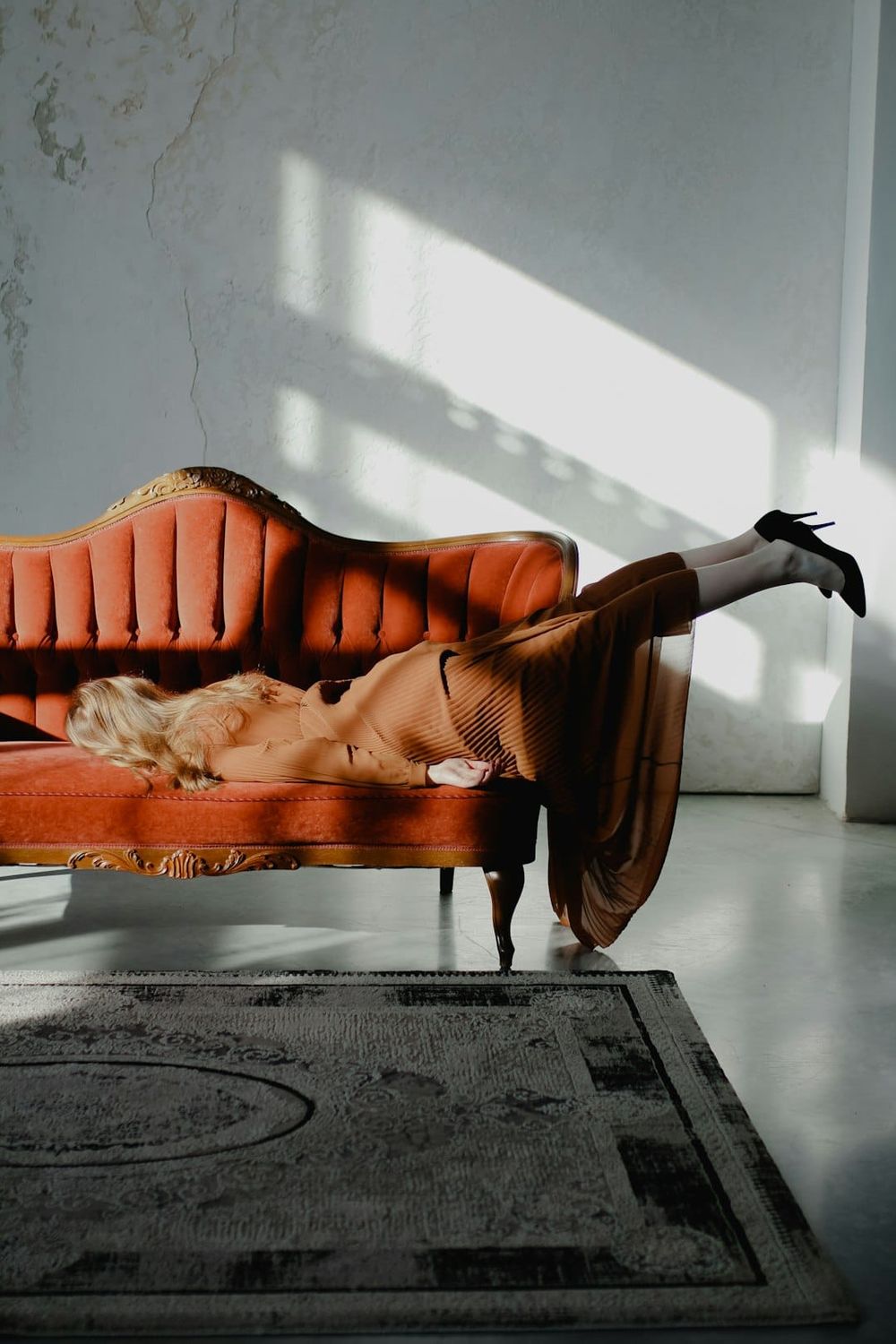
I have a theory that many women don’t actually know what they want to do with free time.
Which sounds ridiculous until you consider how much of our lives have been organized around everyone else.
Children.
Partners.
Work.
Parents.
Schedules.
Responsibilities.
I certainly didn’t.
There was a version of a free evening that I had down to a ritual.
I’d open a bottle of something good, pour a glass before I’d even decided what to eat, and then spend a satisfying amount of time selecting snacks that would actually pair well with it. Olives. Something with goat cheese. Those tasty rosemary and salted La Panzanella crackers. Fig spread if I had it.
Then I’d climb into bed with all of it and put on whatever season of The Real Housewives was current. It didn’t matter which city. The point was the particular pleasure of horizontal television watching with wine and no obligations until morning.
I told myself, this is the life.
I’d actually say it to myself.
This is the life.
And I meant it.
What I didn’t understand then, and what took me an embarrassingly long time to work out, was that I had no idea what I actually wanted to do with unstructured time.
I had built an entire life around two organizing principles: working and mothering. When neither of those was required of me for an evening, I reached for wine.
Looking back, the wine wasn’t even the most interesting part.
The part that still gets me is that if you’d removed it, I wouldn’t have known what to do with myself.
I’ve been thinking about this since I received a message from a woman in her early forties. Her daughter is still in high school but barely home. She’s single. Hormonally in the thick of it. She wrote that she knows this chapter is supposed to feel like hers. She can feel the invitation of it. And yet most mornings she wakes up feeling like she’s living someone else’s life in a body she doesn’t quite recognize.
I recognized everything she was describing.
The wanting to want your own life. The gap between knowing it’s your turn and actually feeling turned on by it.
The irony is that many of us spent years counting down to this chapter. We anticipated the other side of the heavy years. The years of being needed by everyone. The years of being stretched thin.
And then we arrive and discover we’ve spent so long responding to everyone else’s needs that we don’t have a clear sense of our own.
Not what we want to watch. Not what we want to eat. Not how we want to spend a free hour. Not even, sometimes, how we want to spend the second half of our lives.
Most of us have been some combination of daughter, partner, mother, employee, caretaker, and manager for so long that we’ve mistaken the role for the self.
And when the roles start loosening, the disorientation is real.
It doesn’t always announce itself as an awakening.
Sometimes it announces itself as wine o’clock.
Or at least it did in my experience.
The wine filled the gap because it gave me something to do.
I knew exactly what the evening was going to look like. I’d pour a glass, assemble the snacks, put on a show and settle in.
It never occurred to me to ask myself anything else.
What did I actually feel like doing?
What sounded fun?
What was I interested in?
I couldn’t have answered those questions if you’d paid me.
The disorientation didn’t disappear when I put the glass down.
If anything, it doubled.
I found myself much like the woman I mentioned earlier, thinking: I have no idea what’s next for me because I don’t even know me.
Most every decision I had made up until that point was rooted in someone else.
Is this good for my kids? Is this what a good wife does? How will this look from the outside?
Up until my kids moved out, I had never lived alone. I was almost forty-two.
Questions like what I would watch on television without wine or whether I’d ever meet someone who didn’t drink suddenly felt trivial.
The bigger questions were harder to avoid.
How do I want to spend my life?
Who do I want to become?
What do I actually want next?
What surprised me most was realizing that the wine hadn’t been creating those experiences.
It had just attached itself to them.
For years I gave the glass credit for things that were never coming from the glass in the first place. The first time I went two-stepping sober, I had more fun. I had mind-blowing sex without a drink. I spent two weeks in Paris and didn’t think about wine once.
Even doing nothing.
Especially doing nothing.
When I took the wine away, those things didn’t disappear.
If anything, they became easier to find.
The question I keep coming back to is whether many of us have confused relief with pleasure.
The evening glass of wine, the snacks, the horizontal television watching. That isn’t inherently a problem. I genuinely enjoyed it.
The question is whether what we’re reaching for at the end of the day is actually what we’re hungry for, or whether it’s simply the closest available substitute.
Maybe that’s why so many women feel unsettled when the kids grow up, the marriage changes, the career stabilizes, or the drinking stops.
For years we’ve been responding to what everyone else needed from us.
Then one day we’re left alone with a much more complicated question:
What do I need?